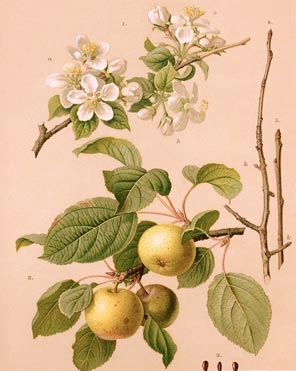
Historical botanical illustration of crab apple, public domain
Crab Apple
Malus sylvestris
Family · Rosaceae
the wild ancestor of the cultivated apple, native to europe and central asia. smaller, harder, more sour, and far higher in pectin and polyphenols than modern eating apples. used since prehistoric times across europe for digestive complaints, wound healing, and as a key ingredient in cider, verjuice, and folk remedies. one of the nine plants of the anglo-saxon nine herbs charm, where it is usually identified with the plant called wergulu.
Across Traditions
how the world has known it
Modern Research
crab apple is high in pectin (one of the highest of any fruit), tannins, and polyphenols including quercetin and chlorogenic acid. research supports use of apples generally for cardiovascular health, gut microbiome support (via pectin), and antioxidant benefits. crab apples specifically have higher polyphenol content than cultivated varieties. traditional astringent use for diarrhea, wound cleansing, and digestive complaints is supported by high tannin and pectin content. preliminary research on antimicrobial activity of crab apple extracts.
Where to buy
Source thoughtfully
FolkRoot may earn a small commission, which keeps the herbarium tended.
Related Remedies
others for kindred conditions
Appendices
deeper notes from the herbarium