
Sub-Saharan Africa
African
~60,000+ years to present (oldest documented herbal use in human history)
african traditional medicine is the worlds oldest documented system of herbal healing, with archaeological evidence of medicinal plant use stretching back at least 60,000 years and possibly longer. it is not a single tradition but the collective living medicine of over 3,000 distinct ethnic groups across a continent of 1.4 billion people, encompassing more biological and cultural diversity than any other region on earth. african traditional medicine is currently used by an estimated 80 percent of the population of sub-saharan africa as primary healthcare, making it the most widely practiced medical system in the world by raw number of patients served, though it remains the least documented and least respected in global medicine. european colonization, slavery, and decades of postcolonial dismissal of indigenous knowledge have caused massive losses of african medical traditions, but living lineages survive and are now being actively documented and defended.
Societal Role
the place it held among the people
african traditional medical practitioners operate under hundreds of different names and roles across the continent, including herbalists (often called nganga in bantu languages, ozain in yoruba, dibia in igbo), spiritual healers and diviners (sangoma in zulu, babalawo in yoruba, bokono in fon, nganga in central africa), midwives, bone-setters, and ceremonial leaders. in most traditional african societies, medicine, religion, and community leadership are not separate domains; healers are also spiritual advisors and community judges. training typically involves long apprenticeships under elder practitioners, often beginning in childhood, with knowledge passed through hereditary lineages or through spiritual calling (often signaled by illness or dreams). modern african traditional medicine is increasingly formalized, with several countries including south africa, nigeria, ghana, and zimbabwe establishing official councils that register and regulate traditional practitioners.
Modern Influence
how it echoes today
african traditional medicine serves an estimated 80 percent of sub-saharan africas population as primary healthcare, making it the most widely practiced medical system in the world. the world health organizations 2014 to 2023 traditional medicine strategy specifically prioritized african traditional medicine. african medicinal plants have contributed major drugs and supplements to global pharmacy, including rooibos, hoodia (briefly marketed as an appetite suppressant by pfizer), pelargonium (umckaloabo), and ibogaine (for addiction treatment). biopiracy remains a major ongoing issue, with foreign pharmaceutical companies repeatedly attempting to patent traditional african medicines without compensating source communities. the african union, who, and several african national governments are working to establish intellectual property frameworks that protect traditional knowledge while allowing scientific research and ethical commercialization. african traditional medicine has also flowed into diaspora medical traditions worldwide, forming the foundation of haitian vodou medicine, brazilian candomble healing, cuban santeria, jamaican obeah, and the herbalism of african american rootworkers, conjurers, and granny healers in the american south.
Remedies in this lineage
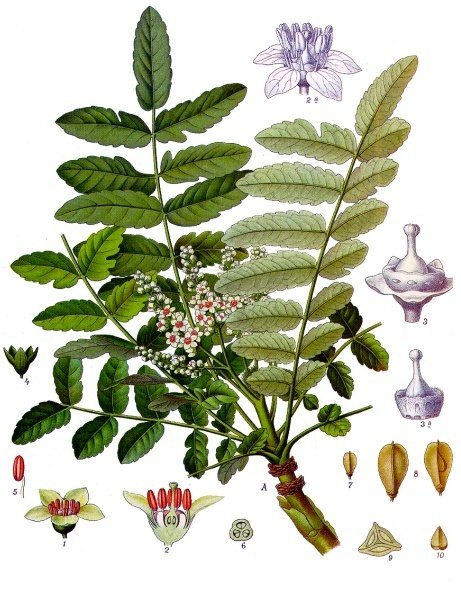
Frankincense
Boswellia serrata
a milky resin tapped from the bark of small trees that grow in the harsh dry mountains of oman, yemen, somalia, and india. burned in sacred ceremonies for at least five thousand years and prescribed in the worlds oldest medical texts for joint pain and inflammation.
Moringa Leaf
leafMoringa oleifera
a fast-growing tree whose leaves, pods, and seeds are among the most nutrient-dense foods on earth. native to india and now cultivated across africa, the caribbean, and cape verde where it is called acacia branca and used as both food and medicine.

Hibiscus
Hibiscus sabdariffa
a deep-red flowering plant whose tart calyces have been brewed into healing teas across five continents. originally african, now central to traditions from sudan to mexico.

Tamarind
Tamarindus indica
a tropical tree whose tart, sweet-sour fruit pulp is used as both food and medicine across africa, asia, the caribbean, and cape verde. used for digestion, fever, and as a gentle laxative for thousands of years.

Aloe Vera
Aloe vera
a succulent plant whose inner gel has been used for over 6000 years across nearly every traditional medicine system on earth for burns, wounds, skin conditions, and digestive complaints. one of the most universally adopted medicinal plants in human history, growing on windowsills across cape verde, latin america, africa, india, and beyond.

Soursop
Annona muricata
a spiny green tropical fruit native to the caribbean, central america, and northern south america, with a sweet-tart white flesh and a strong folk medicine tradition across the tropics. the leaves and fruit have been used for centuries for digestion, inflammation, and infections. claims about cancer-fighting properties are widespread online but currently rely on lab and animal studies, not human clinical trials.

Mango
Mangifera indica
the most cultivated tropical fruit in the world, native to south asia and grown for over four thousand years across the indian subcontinent. called the king of fruits in india, mango carries deep cultural and religious significance: mentioned in vedic texts, depicted in buddhist art, and used in hindu temple offerings. nearly every part of the tree has medicinal use in ayurveda, with the fruit, leaves, bark, seed, and unripe fruit all having distinct applications.

Papaya
Carica papaya
a tropical fruit native to central america and southern mexico, now grown across the tropical world. famous in modern medicine for papain, a protein-digesting enzyme extracted from the unripe fruit and used in commercial meat tenderizers, digestive supplements, and wound debridement products. nearly every part of the papaya tree has traditional medicinal use across mesoamerican, caribbean, african, and southeast asian folk traditions.

Spirulina
Arthrospira platensis
a microscopic spiral-shaped blue-green algae growing in warm alkaline lakes across mexico, africa, and asia. eaten as a daily food by the aztec people of lake texcoco for centuries before european contact, and traditionally harvested by the kanembu people around lake chad in west africa, who still produce a dried cake called dihe. one of the most nutritionally dense foods on earth, gram for gram, and a serious medicinal substance with strong research support across multiple conditions.

Banana
Musa acuminata
one of the most eaten fruits on earth, originally from southeast asia and now grown across every tropical region. beyond being a convenient food it has a real place in folk medicine, mostly for digestion and as a steady source of potassium. ripe bananas are a classic gentle food for an upset stomach, and green or unripe bananas have a documented effect on diarrhea. the peel and the plant itself also turn up in traditional skin and wound remedies.

Lime
Citrus aurantiifolia
a small sour citrus fruit grown throughout the tropics, used as heavily in medicine and household life as in cooking. like other citrus it is a strong source of vitamin c and was used to prevent scurvy, which is the origin of the nickname limey for british sailors. across the caribbean, latin america, africa, and south asia, lime juice is a daily remedy for digestion, colds, and as a cleansing wash, and cape verdean and west african kitchens lean on it heavily.

Watermelon
Citrullus lanatus
a sprawling vine fruit native to africa, where its wild ancestors were valued as much for stored water as for food in dry country. beyond being mostly water and sugar, watermelon is the richest food source of citrulline, an amino acid the body turns into arginine to support blood flow. the rind and seeds were used in folk medicine across africa and asia as cooling, mildly diuretic remedies, and the red flesh carries the same lycopene pigment found in tomatoes.

Date
Phoenix dactylifera
the fruit of the date palm, one of the oldest cultivated foods in the world and a staple of the middle east and north africa for thousands of years. dates are dense in natural sugars and minerals, which made them a portable strength food for travelers and a traditional remedy for weakness, anemia, and constipation. they hold a special place in islamic tradition as the food for breaking a fast, and they have surprisingly modern research behind their use in late pregnancy.

Sweet Potato
Ipomoea batatas
a starchy root native to central and south america that became a staple across africa, the caribbean, cape verde, and the pacific. the orange-fleshed kind is one of the best food sources of beta carotene, which the body turns into vitamin a, and it has been used in global health programs to fight vitamin a deficiency and childhood blindness. unlike white potato, it delivers its carbohydrate with more fiber and a gentler effect on blood sugar.

Sesame
Sesamum indicum
one of the oldest oilseed crops, domesticated in africa and india, and central to ayurvedic self-care, where sesame oil is the primary oil for warm massage, oil pulling, and nasal care. the seeds are notably rich in calcium and in lignans called sesamin, plant compounds studied for cholesterol and blood pressure. it is a deeply traditional food and medicine, and also one of the most significant food allergens.
Gotu Kola
Centella asiatica
gotu kola is a creeping asian herb used in ayurveda for memory and on the skin for wounds. see its history, research, dosage and safety notes.