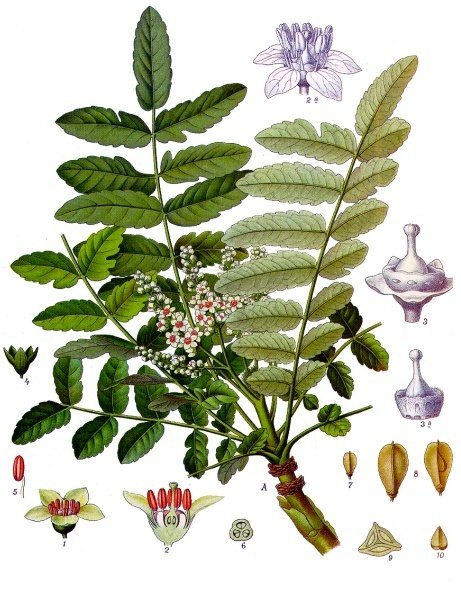
Köhler's Medizinal-Pflanzen, Plate 22, 1887, public domain via Wikimedia
Found across 2 traditions
Frankincense
Boswellia serrata
Family · Burseraceae
a milky resin tapped from the bark of small trees that grow in the harsh dry mountains of oman, yemen, somalia, and india. burned in sacred ceremonies for at least five thousand years and prescribed in the worlds oldest medical texts for joint pain and inflammation.
Across Traditions
how the world has known it
Origin
Ayurveda
Adopted
African
Ayurveda
origin: 3000+ yearssalai guggal
used in ayurveda under the sanskrit name salai guggal for joint pain, arthritis, and inflammatory conditions. mentioned in the charaka samhita as a treatment for rheumatic complaints. the indian variety (boswellia serrata) is the most studied in modern research.
African
origin: ancientolibanum
harvested for thousands of years in the dhofar region of oman, somalia, and yemen. tappers cut small wounds in the bark of boswellia trees and return weeks later to collect the hardened tears of resin. the practice has been passed down through generations of nomadic peoples.
History
the path it has traveled
Modern Research
modern clinical research strongly supports frankincense extract for osteoarthritis, rheumatoid arthritis, and inflammatory bowel disease. boswellic acids inhibit a specific inflammatory enzyme called 5-lipoxygenase, a different mechanism than nsaids, which makes it useful as a complementary anti-inflammatory. studies show meaningful joint pain reduction over 8 to 12 weeks of use. also studied for asthma and brain health.
Where to buy
Source thoughtfully
FolkRoot may earn a small commission, which keeps the herbarium tended.
Related Remedies
others for kindred conditions
Appendices
deeper notes from the herbarium