
North America
Native American
~15,000+ years to present (with some traditions reaching even deeper into prehistory)
native american herbal medicine is not a single tradition but the collective living knowledge of over 1,000 distinct indigenous peoples who have inhabited the americas for at least 15,000 years, and possibly far longer. these traditions encompass everything from the deep botanical knowledge of the eastern woodlands tribes to the high-altitude pharmacopoeia of the andean cultures, from the desert plant medicine of the southwest to the arctic herbalism of the inuit and yupik peoples. while each nation has its own distinct medical tradition with its own language, philosophy, and specific practices, certain shared principles run through nearly all native american healing: the medical practice is inseparable from spirituality, plants are treated as relatives rather than commodities, and healing involves the whole person within their community and environment rather than just treating isolated symptoms. european colonization beginning in 1492 destroyed an enormous portion of this knowledge through genocide, forced displacement, banned ceremonies, and the deliberate suppression of native languages in which medical knowledge was carried, but living lineages of practice survived and are now being actively revived.
Societal Role
the place it held among the people
native american medical practitioners (variously called medicine men, medicine women, healers, shamans, or by specific nation-language terms like dineh hataalii or cherokee didanvwisgi) typically underwent extensive multi-decade training under elder mentors. in most native traditions, healing was not a profession separable from spiritual practice; medicine people were also ceremonial leaders, prayer carriers, and community spiritual guides. specific nations had different organizational structures: some had distinct medicine societies (like the haudenosaunee false face society), some had hereditary medicine lineages (in some southwest pueblos), some had medicine people identified through dreams or visions (common across many nations). womens medical knowledge was particularly important for womens reproductive health, childbirth, and family medicine, though women also served as primary healers in many nations. european colonization disrupted nearly all of these systems, but tribally controlled training is being actively rebuilt today.
Modern Influence
how it echoes today
native american medical knowledge has contributed extensively to modern western pharmacy, though usually without proper credit or compensation to indigenous knowledge holders. echinacea (now a global cold and flu remedy), witch hazel, american ginseng, sassafras, slippery elm, blue cohosh, black cohosh, goldenseal, and dozens of other now-mainstream herbs entered global use through native american traditional knowledge. pharmaceutical companies have repeatedly attempted to patent traditional native plant uses, prompting ongoing legal and ethical battles. modern integrative medicine has been heavily influenced by native american concepts including the unity of mind-body-spirit, the importance of relationship and community in healing, and the use of ceremony and intention in medical practice. tribally run health systems including the indian health service and the cherokee nation health services now formally integrate traditional healing alongside western medicine, with some health facilities employing both western-trained physicians and traditional medicine people. the sacred herbs of native america (tobacco, cedar, sage, sweetgrass) are now used in ceremonies worldwide, sometimes with appropriate cultural protocols and sometimes appropriated without permission, a major ongoing ethical issue.
Remedies in this lineage

Mugwort
Artemisia vulgaris
a tall silvery-green plant with deeply cut leaves and a bitter aromatic scent, found growing wild along roadsides and waste places across nearly the entire northern hemisphere. one of the oldest and most universally used herbs in human history, prized in european, chinese, japanese, and native american traditions for protection, digestion, and dreams.

Echinacea
Echinacea purpurea, Echinacea angustifolia
a north american prairie flower that became one of the most iconic immune-supportive herbs in modern western herbalism. originally used by plains tribes for snakebite, infections, and wounds.

White Willow Bark
Salix alba
the original aspirin. the inner bark of the white willow tree contains salicin, which the body converts to salicylic acid. used for over 3,500 years across europe, china, and the mediterranean for pain, fever, and inflammation.

Passionflower
Passiflora incarnata
a striking purple-and-white flowering vine native to the southeastern united states, used by native americans for centuries and adopted by european settlers as one of the most reliable calming herbs. classified as a gabaergic plant, working through the same neural pathway as many anti-anxiety medications.

Blueberry
Vaccinium corymbosum, Vaccinium angustifolium
a north american native fruit used for centuries by indigenous peoples as food and medicine, now one of the most clinically studied fruits in the world for cognitive function, eye health, and cardiovascular protection. the european relative bilberry (vaccinium myrtillus) shares most of the same medicinal properties.

Cranberry
Vaccinium macrocarpon
a tart red berry native to the bogs and wetlands of northeastern north america, used by indigenous nations for centuries as both food and medicine. one of the most clinically studied native american plants in modern pharmacology, with strong research support for urinary tract health. southeastern massachusetts and cape cod produce roughly a quarter of the worlds cranberry supply, an industry deeply tied to cape verdean immigrant history.
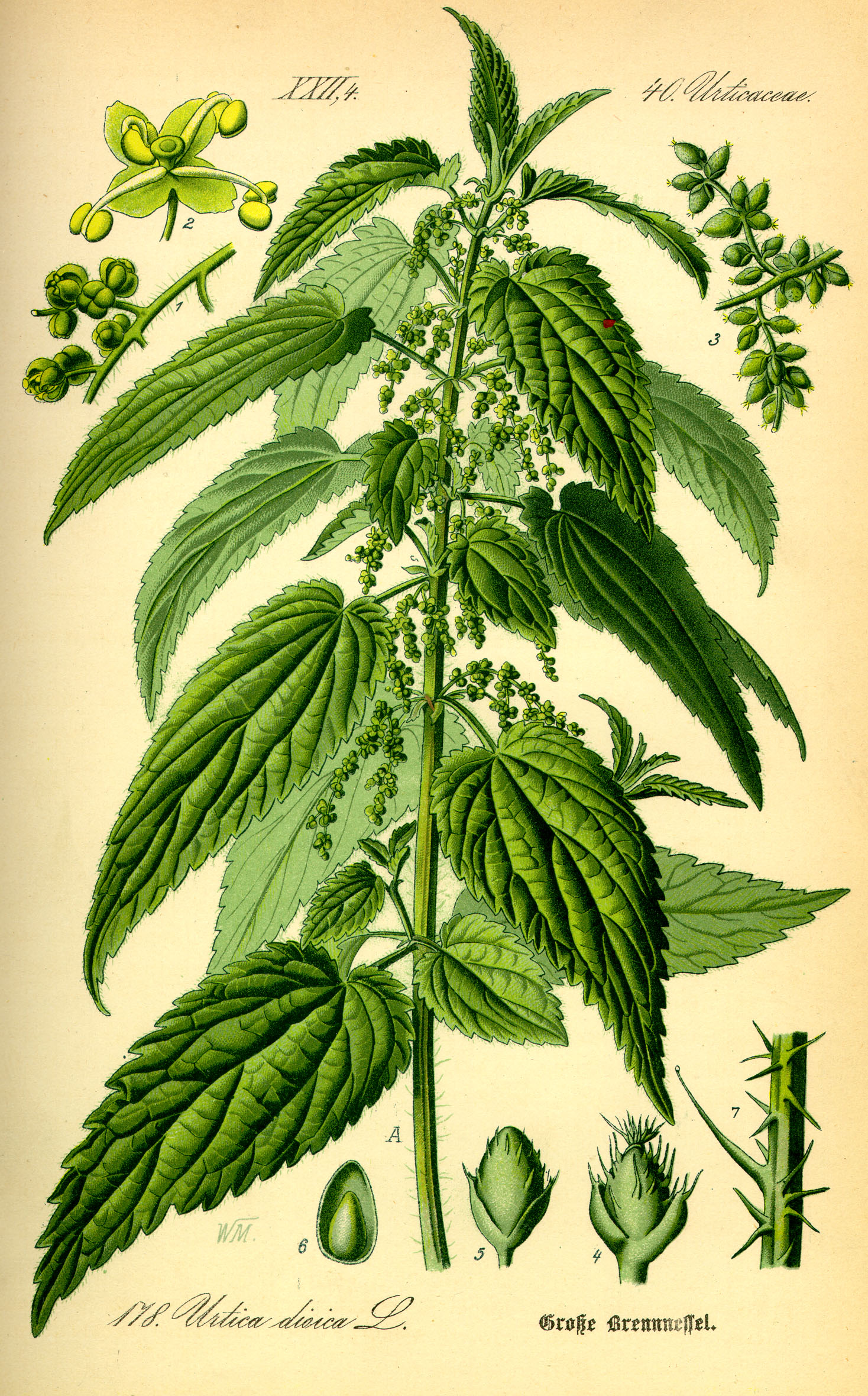
Nettle
Urtica dioica
the plant that stings you in the woods is also one of the most nutrient-dense and clinically validated herbs in european folk medicine. used since neolithic times for allergies, joint pain, anemia, and as a spring tonic. once cooked or dried, the stinging hairs become harmless and reveal a mineral-rich, anti-inflammatory medicine.

Dandelion
Taraxacum officinale
the lawn weed that herbalists call medicine. every part is edible and medicinal: leaves are a mineral-rich diuretic, root supports liver function, and flowers are made into wine. used across europe, china, and the americas for liver, kidney, and digestion. one of the most clinically active common weeds in the world.

Plantain
Plantago major
a low-growing weed found on every continent, used as a first-aid plant for over two thousand years. not related to the banana fruit also called plantain. crush a leaf, slap it on a bee sting or scrape, and the pain backs off within minutes. one of the most reliable and universally available wild medicines.

Yarrow
Achillea millefolium
a feathery wild plant named after the greek hero achilles, who reportedly used it to staunch the bleeding of his soldiers at troy. one of the oldest documented wound-healing herbs in european medicine, with neanderthal burial sites showing yarrow among gathered medicinal plants 60,000 years ago. astringent, anti-inflammatory, and circulation-stimulating.

Mullein
Verbascum thapsus
a tall plant with soft fuzzy gray-green leaves and a yellow flower spike. used since ancient greece for lung complaints, coughs, and ear infections. one of the most reliable traditional respiratory herbs, with mucilage that coats and soothes irritated airways. the leaves are so soft they have been used as natural toilet paper across multiple cultures.

Raspberry Leaf
Rubus idaeus
the leaves of the common red raspberry plant, native to europe and northern asia and now grown worldwide. used for centuries as the classic womens herb across european folk medicine, particularly for pregnancy, labor preparation, menstrual cramps, and postpartum recovery. one of the most widely consumed traditional womens reproductive tonics in the english-speaking world.

Catnip
Nepeta cataria
a member of the mint family, famously intoxicating to cats but quietly used by humans for centuries as a gentle calming herb. native to europe and central asia, now naturalized worldwide. used since the time of dioscorides for sleep, anxiety, fever, and digestive complaints. one of the safest and most reliable traditional herbs for children, used across european tradition for colic, restlessness, and minor fevers.

Goldenseal
Hydrastis canadensis
a low woodland plant native to the eastern forests of north america, with a knotty bright yellow root that gave it both its name and its old use as a dye. the cherokee and iroquois used the root for skin problems, inflamed eyes, sore mouths, and digestive complaints. it became one of the most prescribed medicinal plants in 19th century american herbalism, a staple of the eclectic physicians who reached for it whenever a mucous membrane was inflamed. that popularity nearly destroyed it. wild goldenseal was dug out of the forests so aggressively that it is now listed as at risk and protected under international trade rules, so only cultivated root should ever be bought.

Slippery Elm
Ulmus rubra
a north american tree whose inner bark turns slick and gel-like the moment it meets water. that gel, called mucilage, is the whole point of the plant. native peoples of the eastern woodlands scraped the inner bark, dried it, and used it as food during famine and as medicine for sore throats, upset stomachs, coughs, and wounds. it was reliable enough that it became a survival staple, and george washingtons troops at valley forge reportedly ate it to get through the winter. settlers picked it up fast, and it became one of the steadiest household remedies in early america for anything raw or inflamed, inside or out.

Blackberry
Rubus fruticosus
the dark berry of the thorny bramble, common across europe and north america in hedgerows and waste ground. while the berries are eaten as fruit, the older medicine is in the leaf and root, which are strongly astringent and were a standard folk treatment for diarrhea and for sore throats and mouth ulcers. both european and native american healers reached for blackberry root and leaf to tighten and dry an overactive or inflamed gut.

Strawberry
Fragaria × ananassa
the common garden strawberry is a modern hybrid of wild species from north america and south america, but wild strawberries and their leaves were used as food and medicine in europe and by native peoples long before. the berries are prized for vitamin c and a deep store of antioxidant polyphenols, while the leaf has a quieter folk history as a mild astringent tea for upset stomach and as a gentle tonic.

Corn
Zea mays
the staple grain domesticated in mexico thousands of years ago and now grown around the world. as food it is energy and fiber, but its real medicine is a part most people throw away: corn silk, the fine threads inside the husk. brewed as a tea, corn silk is a traditional diuretic used across native american, latin american, and chinese medicine for urinary and bladder complaints and for easing fluid retention.

Walnut
Juglans regia
the walnut, juglans regia, has been grown from persia to china for thousands of years. old herbals tied it to the brain. research points more to the heart.