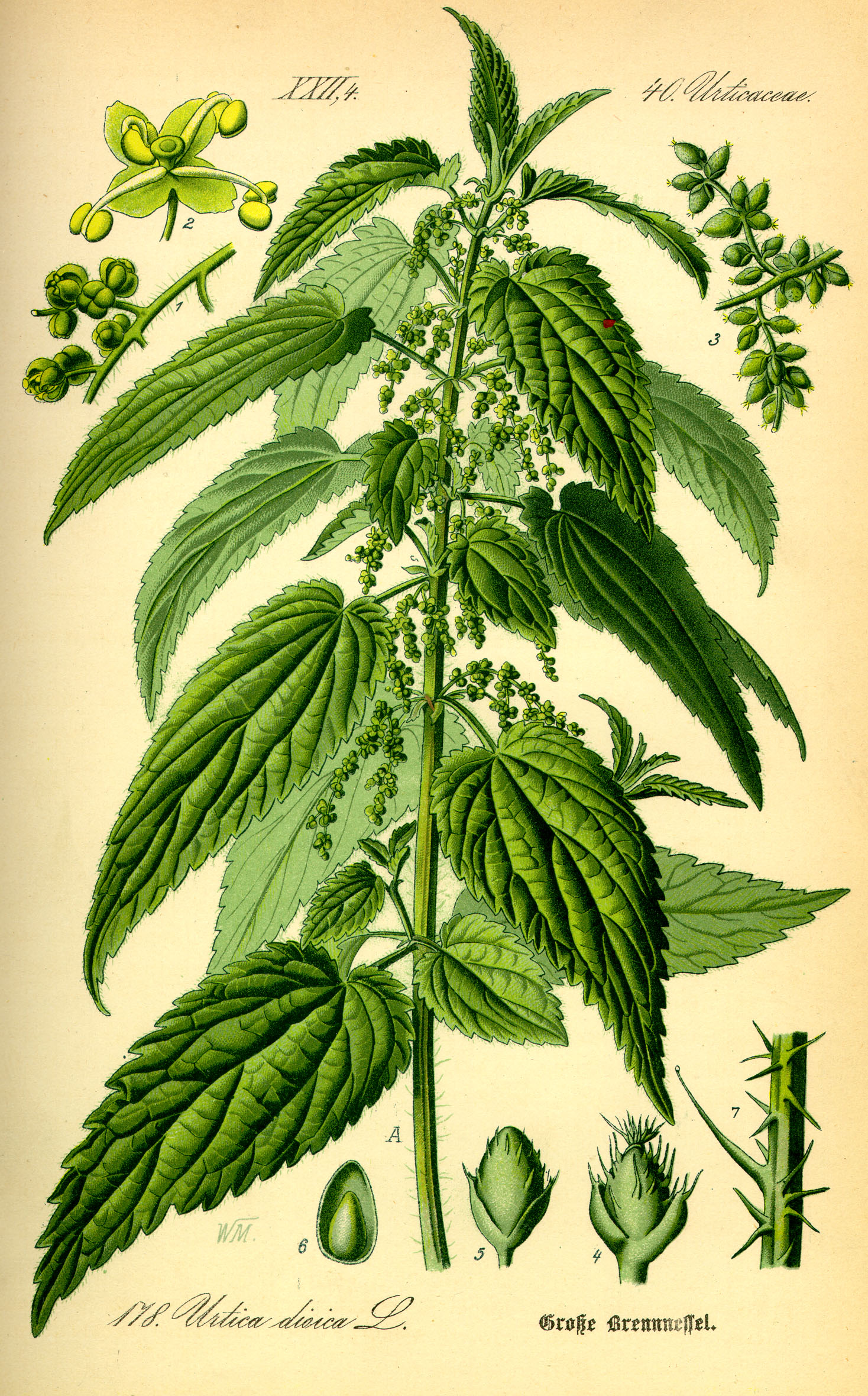
Thomé, Flora von Deutschland, 19th century botanical illustration, public domain via Wikimedia
Found across 2 traditions
Nettle
Urtica dioica
Family · Urticaceae
the plant that stings you in the woods is also one of the most nutrient-dense and clinically validated herbs in european folk medicine. used since neolithic times for allergies, joint pain, anemia, and as a spring tonic. once cooked or dried, the stinging hairs become harmless and reveal a mineral-rich, anti-inflammatory medicine.
Across Traditions
how the world has known it
Origin
European Folk
Adopted
Native American
European Folk
origin: ancientstinging nettle, urtiga
used since neolithic europe for fiber, food, and medicine. greek and roman physicians used it for arthritis, hair loss, and as a diuretic. medieval european monasteries cultivated it as a spring tonic to combat winter nutrient deficiency. urtication, the deliberate stinging of arthritic joints with fresh nettle, was used across europe for joint pain (counterintuitive but effective via mild counter-irritation). still consumed as soup and tea throughout portugal, ireland, scotland, and eastern europe.
Native American
long establishedstinging nettle
multiple north american indigenous nations used native nettle species for fiber (strong cordage), food, and medicine. used for joint pain, urinary issues, and pregnancy-related anemia. fresh leaves applied topically for arthritis as urtication, the same practice as in europe.
History
the path it has traveled
Modern Research
clinical research supports nettle leaf for seasonal allergies (multiple trials show reduction in hay fever symptoms), and nettle root for benign prostatic hyperplasia (bph) where it is commonly combined with saw palmetto in european medicine. anti-inflammatory effects validated in osteoarthritis studies. exceptionally high in iron, calcium, magnesium, vitamin k, and silica. leaf and root are used for different purposes.
Where to buy
Source thoughtfully
FolkRoot may earn a small commission, which keeps the herbarium tended.
Related Remedies
others for kindred conditions
Appendices
deeper notes from the herbarium