
Indian subcontinent
Ayurveda
1500 BCE to present (~3,500 years documented, with prehistoric roots possibly extending 5,000 years)
ayurveda is one of the worlds oldest continuously practiced medical systems, developed in the indian subcontinent over at least 3,000 years and possibly as long as 5,000. the name comes from the sanskrit words ayur (life) and veda (knowledge or science), and the tradition treats medicine as inseparable from philosophy, spirituality, and daily living. ayurveda is not simply a system of herbs and treatments; it is a comprehensive framework for understanding the human body, mind, and place in the natural world.
Societal Role
the place it held among the people
ayurvedic practitioners were called vaidyas, a hereditary professional class trained through long apprenticeships with senior teachers (gurus). traditional vaidya families passed knowledge down through generations, with sons typically learning from fathers. ayurveda was integrated into indian society at every level: court physicians (rajavaidyas) served kings and emperors; village vaidyas served farming communities; and household ayurveda was practiced by mothers and grandmothers cooking with medicinal spices, preparing seasonal tonics, and treating common ailments at home. ayurvedic principles also shaped indian cuisine, daily routines (dinacharya), seasonal practices (ritucharya), and spiritual disciplines including yoga. monastic communities (both hindu ashrams and buddhist viharas) also produced significant ayurvedic scholarship and clinical practice.
Modern Influence
how it echoes today
ayurveda is officially recognized by the indian government and the world health organization. india has 500,000+ registered ayurvedic practitioners, 250+ medical colleges, and a multi-billion dollar domestic industry. global exports of ayurvedic products exceed 10 billion dollars annually. ayurvedic herbs are now mainstream ingredients in the global wellness industry. modern clinical research has validated many traditional ayurvedic claims, though pharmaceutical attempts to isolate single active compounds typically underperform whole-herb preparations. ayurvedic principles of personalized medicine, dietary therapy, lifestyle integration, and mind-body unity are increasingly influencing functional medicine and integrative health practices worldwide. yoga, which shares ayurvedas philosophical foundation, has become globally mainstream with over 300 million practitioners worldwide.
Remedies in this lineage

Turmeric
Curcuma longa
A golden rhizome that has anchored Indian medicine and cuisine for over 4,000 years. Its primary active compound, curcumin, is one of the most-studied plant compounds in modern research.

Ginger
Zingiber officinale
a warming rhizome used for thousands of years across asia for digestion, nausea, and inflammation. one of the most clinically validated herbs in modern research.

Ashwagandha
Withania somnifera
a grounding root from the indian subcontinent whose sanskrit name translates to smell of the horse, referring to its earthy aroma and reputed power to confer vigor. used for three millennia as an adaptogen.
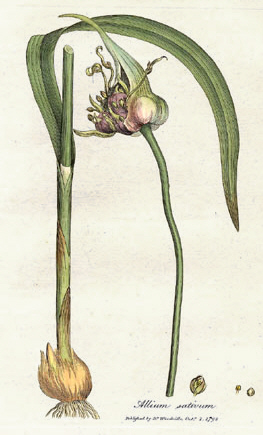
Garlic
Allium sativum
a pungent bulb used as both food and medicine across nearly every culture on earth. the workers who built the egyptian pyramids ate it daily, and modern research validates what ancient peoples knew about its cardiovascular and immune benefits.

Cinnamon
Cinnamomum verum
a warm aromatic bark from a small evergreen tree native to sri lanka. one of the oldest known spices, traded across continents long before recorded history. ceylon cinnamon is the true cinnamon, distinct from the common cassia variety.

Holy Basil
Ocimum tenuiflorum
a fragrant green-leafed plant grown in courtyards across india, where it is considered sacred and given daily reverence. tulsi is an adaptogen that calms the nervous system while supporting energy and resilience. distinct from culinary basil.
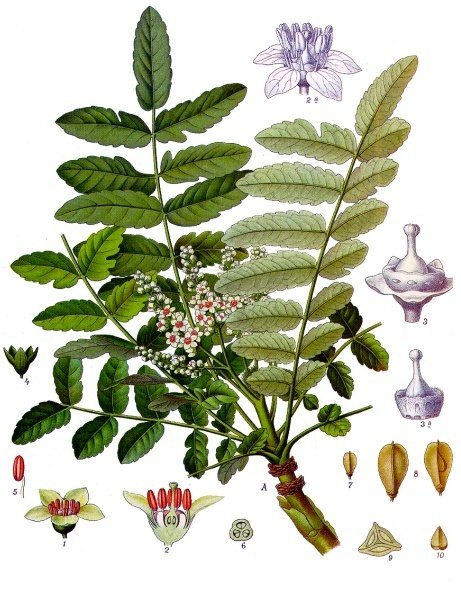
Frankincense
Boswellia serrata
a milky resin tapped from the bark of small trees that grow in the harsh dry mountains of oman, yemen, somalia, and india. burned in sacred ceremonies for at least five thousand years and prescribed in the worlds oldest medical texts for joint pain and inflammation.

Saffron
Crocus sativus
the dried red stigmas of a small purple crocus flower, harvested by hand at dawn during a three-week window each autumn. it takes roughly 150,000 flowers to produce one kilogram of saffron, making it the most expensive spice on earth by weight, gram for gram more valuable than gold for most of recorded history.
Moringa Leaf
leafMoringa oleifera
a fast-growing tree whose leaves, pods, and seeds are among the most nutrient-dense foods on earth. native to india and now cultivated across africa, the caribbean, and cape verde where it is called acacia branca and used as both food and medicine.

Hibiscus
Hibiscus sabdariffa
a deep-red flowering plant whose tart calyces have been brewed into healing teas across five continents. originally african, now central to traditions from sudan to mexico.

Shatavari
Asparagus racemosus
a climbing plant native to india and the himalayas whose tuberous roots have been used in ayurveda for over 3000 years as the premier herb for womens health, fertility, and emotional balance. the sanskrit name shatavari translates as she who possesses a hundred husbands, a reference to its reputation for supporting womens vitality and reproductive function.

Tamarind
Tamarindus indica
a tropical tree whose tart, sweet-sour fruit pulp is used as both food and medicine across africa, asia, the caribbean, and cape verde. used for digestion, fever, and as a gentle laxative for thousands of years.

Fennel
Foeniculum vulgare
an aromatic mediterranean plant whose seeds and bulb have been used for over 4000 years across europe, north africa, india, and the iberian colonial diaspora. famous for soothing digestion and calming colicky babies. central to portuguese folk medicine and brought to cape verde during colonization, where it became a household staple.

Cilantro
Coriandrum sativum
one of the oldest documented culinary herbs, with seeds found in ancient egyptian tombs over 3000 years old. the fresh leaves (cilantro) and dried seeds (coriander) come from the same plant but have very different flavor and use profiles. used across nearly every traditional food culture in the world for digestion, detoxification, and as a flavoring.

Marshmallow Root
Althaea officinalis
a soft, mucilaginous root from a european flowering plant whose name and ancient confection eventually became the modern marshmallow candy (though modern marshmallows contain none of the actual plant). used for over 2000 years to soothe inflamed tissues throughout the digestive and respiratory tracts.

Aloe Vera
Aloe vera
a succulent plant whose inner gel has been used for over 6000 years across nearly every traditional medicine system on earth for burns, wounds, skin conditions, and digestive complaints. one of the most universally adopted medicinal plants in human history, growing on windowsills across cape verde, latin america, africa, india, and beyond.

Celery
Apium graveolens
a mediterranean plant whose stalks, seeds, and leaves have been used as food and medicine for over 3000 years. eaten widely today as a low-calorie vegetable, but its medicinal history is far more serious. modern celery juice has become popular as a wellness trend; the underlying research supports several of its traditional uses, particularly for blood pressure and inflammation.

Pomegranate
Punica granatum
a deep-red fruit native to persia and the himalayas, cultivated for over 5000 years and woven into the mythology of nearly every ancient mediterranean and near-eastern culture. one of the most antioxidant-rich foods on earth, with serious modern clinical research behind its cardiovascular and prostate benefits.

Basil
Ocimum basilicum
a mediterranean culinary herb used for over 3000 years across italian, greek, indian, and southeast asian cooking. less famous as medicine than its sister plant holy basil, but with real digestive, antimicrobial, and anti-inflammatory uses documented across traditions.

Carrot
Daucus carota
the orange root vegetable is one of the most nutrient-dense common foods, but its medicinal history runs deeper than most people realize. wild carrot seeds have been used for over two thousand years across europe, north africa, and asia as a kidney tonic, contraceptive, and digestive aid. the modern cultivated carrot is a powerhouse of beta-carotene, supporting vision, immunity, and skin health.

Lemon
Citrus limon
one of the most universally used culinary and medicinal fruits in the world. originally from south asia, lemons spread through the middle east into europe by way of arab traders and crusaders, and across the americas via spanish and portuguese colonization. famous for preventing scurvy on long sea voyages, but the medicinal applications go far beyond vitamin c.

Cucumber
Cucumis sativus
a cooling fruit cultivated for over 3000 years across south asia, the middle east, and the mediterranean. composed of 96% water with concentrated minerals, antioxidants, and silica. used as both food and topical medicine across nearly every traditional system: skin cooling, eye care, hydration, and gentle internal cleansing.

Lemongrass
Cymbopogon citratus
a tropical grass native to south asia and southeast asia, now cultivated across the tropical world. used for thousands of years in southeast asian, indian, african, and caribbean cooking, but equally important as a traditional medicine for fever, digestion, anxiety, and infection. one of the most universally adopted folk remedies in the tropical world.

Cardamom
Elettaria cardamomum
a fragrant spice from the ginger family, native to the western ghats of southern india and now cultivated across guatemala, sri lanka, and tanzania. one of the most expensive spices in the world by weight, traded across the spice routes since ancient times. used in ayurveda for over three thousand years for digestion, breath, and respiratory complaints. central to indian, middle eastern, and scandinavian cooking, and one of the most clinically validated digestive herbs.

Grape
Vitis vinifera
one of the oldest cultivated fruits in human history, grown across the mediterranean, middle east, and beyond for at least 8000 years. central to greek, roman, jewish, christian, and persian cultures as food, wine, and medicine. modern research has placed grapes at the center of nutrition science thanks to resveratrol and the so-called french paradox: how mediterranean populations eating fatty foods and drinking wine maintained low rates of heart disease.

Mango
Mangifera indica
the most cultivated tropical fruit in the world, native to south asia and grown for over four thousand years across the indian subcontinent. called the king of fruits in india, mango carries deep cultural and religious significance: mentioned in vedic texts, depicted in buddhist art, and used in hindu temple offerings. nearly every part of the tree has medicinal use in ayurveda, with the fruit, leaves, bark, seed, and unripe fruit all having distinct applications.
Triphala
Terminalia chebula, Terminalia bellirica, Phyllanthus emblica
the most widely used formula in all of ayurveda, and one of the oldest, with written use going back more than two thousand years. the name means three fruits, and that is exactly what it is: equal parts of three dried fruits, amalaki (indian gooseberry), bibhitaki, and haritaki, ground to a powder. ayurvedic tradition holds that the three together balance all three doshas, which is the practical reason it became the everyday tonic that almost every household and physician kept on hand. its main reputation is as a gentle bowel regulator and digestive tonic that can be taken long term without the dependency problems of harsh laxatives.

Boswellia
Boswellia serrata
the resin of a gnarled tree native to the dry hill country of india, tapped from the bark much like maple syrup. this is the indian cousin of the frankincense burned as incense, but here the resin is taken internally as one of ayurvedas main remedies for joint and inflammatory complaints. ayurvedic physicians have used it for well over a thousand years under the name shallaki, mainly for arthritis, stiff joints, and inflamed tissue. modern supplement makers sell it as a standardized extract because its anti-inflammatory compounds, the boswellic acids, are now some of the better-studied plant chemicals for joint pain.

Black Pepper
Piper nigrum
the dried unripe berry of a tropical asian vine, and the most traded spice in the world for most of recorded history. beyond flavor it has a real medicinal role, especially in ayurveda, where it is part of the classic trikatu blend used to kindle digestion. its main compound piperine is now well known for a specific trick: it sharply increases how much the body absorbs of other compounds, which is why it is added to turmeric supplements to make the curcumin usable.

Cumin
Cuminum cyminum
a small aromatic seed cultivated in the eastern mediterranean and egypt since antiquity, and one of the oldest spices in continuous use. it traveled the ancient trade routes into india, where it became a cornerstone digestive spice. roasted cumin water, known as jeera water, is a common household drink across south asia for an upset or sluggish stomach.

Coriander
Coriandrum sativum
the dried seed of the same plant that gives us cilantro leaf, but used as a separate spice with its own warm citrusy flavor and its own medicinal role. one of the oldest cultivated spices, found in egyptian tombs and used throughout the ancient mediterranean as a digestive and preservative. the seed settles the stomach where the fresh leaf is used more as a food.

Dill
Anethum graveolens
a feathery mediterranean herb whose leaf and seed are both used, the seed being the more medicinal part. its single most famous use is as the original gripe water: dill seed water was the standard household remedy for colicky babies and for adult gas and indigestion for generations, and dill still appears in commercial gripe waters today.

Mustard
Brassica nigra
the pungent seed of plants in the cabbage family, used both as a condiment and, historically, as one of the most common household medicines in europe. the mustard plaster, a paste of ground seed applied to the chest or aching joints, was a standard treatment for congestion and pain for centuries. it works as a counterirritant, drawing blood to the surface and creating warmth that eases deeper aches.

Fig
Ficus carica
one of the oldest cultivated fruits, grown around the mediterranean and middle east for thousands of years and named throughout ancient and religious texts. the fruit, fresh or dried, is best known as a gentle, reliable laxative, high in fiber and natural sugars. the milky sap, leaves, and fruit also had a long run in folk medicine for skin complaints, sore throats, and coughs.

Coconut
Cocos nucifera
the fruit of the coconut palm, grown across every tropical coast and used so completely that almost nothing is wasted. the water rehydrates, the white flesh feeds, the pressed oil goes on skin and hair and into cooking, and the shell and husk become tools and fuel. in ayurveda, caribbean, west african, and cape verdean practice the various parts have long been used for hydration, skin care, oral health, and digestion. it is one of the most marketed health foods of the last twenty years, which means the real benefits are mixed in with a lot of hype.

Date
Phoenix dactylifera
the fruit of the date palm, one of the oldest cultivated foods in the world and a staple of the middle east and north africa for thousands of years. dates are dense in natural sugars and minerals, which made them a portable strength food for travelers and a traditional remedy for weakness, anemia, and constipation. they hold a special place in islamic tradition as the food for breaking a fast, and they have surprisingly modern research behind their use in late pregnancy.

Spinach
Spinacia oleracea
a leafy green that began in ancient persia and spread through the arab world into india, china, and europe. it is genuinely nutrient-dense, but its old reputation as an iron powerhouse is overstated. the iron is there, but oxalates in the leaf bind much of it so the body absorbs only a fraction. where spinach really earns its place is in vitamin k, folate, the eye-protecting pigment lutein, and natural nitrates that gently support blood pressure.

Onion
Allium cepa
the everyday cooking onion is also one of the most widely used folk medicines in the world. the classic remedy is onion-and-honey cough syrup, made by drawing the juice out of sliced onion with honey or sugar, taken by the spoonful for coughs and sore throats. raw onion poultices were laid on the chest and feet for colds. behind the tradition sits real chemistry: onions are loaded with quercetin and sulfur compounds with antioxidant, antimicrobial, and heart effects.

Radish
Raphanus sativus
a pungent root in the cabbage family, eaten and used as medicine from egypt to east asia for thousands of years. its sharp bite signals its two main traditional jobs: aiding digestion, especially of fatty and starchy meals, and clearing phlegm and cough. the black radish and honey cough syrup of eastern europe and the digestive daikon of japan and china are two faces of the same plant.

Flaxseed
Linum usitatissimum
one of the oldest crops in the world, grown for its fiber and its oil-rich seed since the dawn of agriculture. as a remedy it is unusually well backed: the soluble fiber relieves constipation and lowers cholesterol, the seed is the richest food source of lignans, plant compounds with mild hormonal activity studied for menopause, and the oil is high in the omega-3 fat called ALA. the one catch is that the seed must be ground, since whole flaxseed passes through undigested.

Sesame
Sesamum indicum
one of the oldest oilseed crops, domesticated in africa and india, and central to ayurvedic self-care, where sesame oil is the primary oil for warm massage, oil pulling, and nasal care. the seeds are notably rich in calcium and in lignans called sesamin, plant compounds studied for cholesterol and blood pressure. it is a deeply traditional food and medicine, and also one of the most significant food allergens.

Almond
Prunus dulcis
an ancient nut from the middle east and central asia, treated in ayurveda as a brain and strength tonic, where soaked, peeled almonds are eaten in the morning for memory and vigor. the oil is a classic skin and hair treatment. modern research has been kind to the almond: despite being calorie-dense, it lowers cholesterol and does not drive weight gain, making it one of the better-studied heart-healthy foods.
Psyllium
Plantago ovata
psyllium husk is a soluble fiber from plantago ovata seeds, known in india as isabgol and studied for cholesterol and digestion. see dosage and safety.
Gotu Kola
Centella asiatica
gotu kola is a creeping asian herb used in ayurveda for memory and on the skin for wounds. see its history, research, dosage and safety notes.