← Back
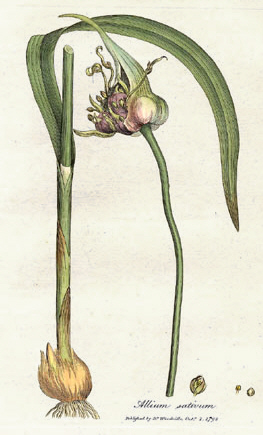
Garlic botanical illustration

William Woodville, Medical Botany, 1793, public domain via Wikimedia

Found across 3 traditions

Garlic

Allium sativum

Family · Amaryllidaceae

Evidence

a pungent bulb used as both food and medicine across nearly every culture on earth. the workers who built the egyptian pyramids ate it daily, and modern research validates what ancient peoples knew about its cardiovascular and immune benefits.

Across Traditions

how the world has known it

Origin

European Folk

→

Adopted

Ayurveda

→

Adopted

Traditional Chinese Medicine

History

the path it has traveled

garlic is one of the oldest cultivated medicinal plants on earth, with archaeological evidence of its use dating back at least 7,000 years. the ancient egyptians treated garlic as both food and medicine, and clay models of garlic bulbs have been found in the tomb of tutankhamun. the greek historian herodotus wrote that an inscription on the great pyramid of giza recorded how much had been spent on radishes, onions and garlic for the workers. a popular story claims the pyramid builders went on strike when their garlic ran short, but that is a myth. the first recorded strike in history came much later, around 1157 bce, when tomb builders at deir el-medina stopped work because their grain rations were late. the egyptian medical text known as the codex ebers, written around 1550 bce, lists 22 separate garlic remedies for ailments ranging from headaches to physical weakness. greek and roman athletes ate garlic before olympic competitions, and roman soldiers consumed it in massive quantities believing it gave them courage and strength on long campaigns. pliny the elder, the roman naturalist, listed 23 uses for garlic in his natural history. through the middle ages, garlic was carried in pouches and worn around the neck as protection against the bubonic plague, a tradition that may have had some basis in reality given garlics genuine antimicrobial properties. a popular legend from the plague of marseille in the 1720s tells of thieves who robbed plague victims without catching the disease and credited a vinegar steeped with garlic and herbs. the recipe is still sold as four thieves vinegar, though the story itself is folklore. in 1858, louis pasteur formally demonstrated that garlic killed bacteria in laboratory conditions, providing the first scientific validation of its ancient reputation. during world war one and two, british and russian armies used raw garlic juice on wounds when antibiotics ran short, and it became known as russian penicillin. the rise of patented antibiotics after 1945 pushed garlic out of mainstream medicine for decades, but it has returned to laboratory study as antibiotic resistance has become a global crisis. modern research has studied garlic most for blood pressure, cholesterol and infection, with the best evidence for a modest drop in blood pressure.

Modern Research

extensive clinical research supports garlic for mild blood pressure reduction, cholesterol management, and immune support. aged garlic extract has the strongest evidence base. active compound allicin forms when fresh garlic is crushed and has antimicrobial, anti-inflammatory, and cardiovascular effects.

Where to buy

Source thoughtfully

FolkRoot may earn a small commission, which keeps the herbarium tended.

Related Remedies

others for kindred conditions

Appendices

deeper notes from the herbarium

fresh raw garlic: 1 to 2 cloves daily, crushed and let stand 10 minutes before consuming to maximize allicin. aged garlic extract capsules for those who cannot tolerate the taste or smell.

600 to 1200mg aged garlic extract daily, or 1 to 2 fresh cloves

allicin, alliin, ajoene, diallyl sulfides, s-allyl cysteine

may increase bleeding risk. discontinue 2 weeks before surgery. may interact with hiv protease inhibitors and blood thinners. raw garlic can cause heartburn or stomach upset in sensitive people.

Blood thinners

Moderate
warfarinaspirinclopidogrel

may increase bleeding risk. monitor closely if combining therapeutic doses.

HIV protease inhibitors

Severe
saquinavirritonavir

may significantly reduce blood levels of protease inhibitors. avoid combination.