← Back
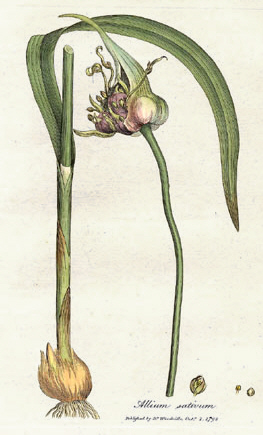
Black Garlic botanical illustration

William Woodville, Medical Botany, 1793, public domain via Wikimedia (source plant: Allium sativum)

Black Garlic

Allium sativum (fermented)

Family · Amaryllidaceae

Evidence

whole garlic bulbs slowly fermented for weeks at low heat and high humidity until the cloves turn jet black, soft, and sweet. the fermentation process transforms harsh allicin into gentler compounds and dramatically increases antioxidant content. originally a korean and japanese preparation, now valued worldwide.

Across Traditions

how the world has known it

History

the path it has traveled

black garlic has a fascinating dual history: an ancient eastern asian folk tradition stretching back over a thousand years, and a sudden 21st century rediscovery that turned it into a global wellness phenomenon. the practice of fermenting whole garlic bulbs at controlled warm temperatures for weeks or months originated in the korean peninsula, where families would bury garlic bulbs in clay pots packed with rice straw and leave them through the long korean winter, producing soft sweet black cloves by spring. similar practices developed in japan, thailand, and parts of china, where fermented garlic was prized as a longevity food and tonic for the elderly. korean traditional medicine called it heuk maneul, black garlic, and prescribed it for low energy, digestive weakness, and as a general restorative, particularly for older men. the fermented preparation was considered more warming and tonifying than raw garlic without the harsh pungency, making it suitable for daily consumption by people whose digestion could not tolerate raw garlic. through centuries of asian use, black garlic remained a regional folk preparation, largely unknown outside east asia and not widely studied scientifically. the modern global story of black garlic began around 2004 in japan, when food scientist scott kim began commercial production of fermented black garlic and began marketing it as a gourmet ingredient to high-end restaurants. korean and japanese researchers had recently published studies showing that the fermentation process dramatically transforms the chemistry of garlic, converting the harsh sulfur compound allicin into a more stable molecule called s-allyl cysteine, while simultaneously creating large amounts of antioxidant melanoidins through the maillard reaction, the same chemical browning process that gives roasted coffee and seared meat their flavor and color. these laboratory findings sparked global interest, and by the early 2010s, michelin-starred chefs across europe and america were incorporating black garlic into their menus, while the wellness industry began promoting it as a functional food with stronger antioxidant properties than raw garlic. unlike most traditional herbs that struggle for legitimacy, black garlic enjoyed an unusual fast track to mainstream acceptance because its scientific story, the maillard reaction transforming sulfur compounds, was easy to explain and rooted in well-understood chemistry rather than requiring belief in any traditional medical framework. clinical research is younger than research on raw garlic but expanding rapidly, with studies suggesting cardiovascular, antioxidant, and blood sugar benefits with better gastrointestinal tolerance than raw garlic. the global market for black garlic has grown from essentially zero in 2004 to hundreds of millions of dollars annually, with korean producers retaining their dominant market position based on centuries of accumulated fermentation expertise.

Modern Research

clinical research on black garlic is younger than research on raw garlic but shows promising results for cardiovascular health, blood sugar regulation, and antioxidant capacity. the fermentation process converts allicin into s-allyl cysteine, a more stable and bioavailable compound. studies suggest stronger antioxidant effects and better tolerability than raw garlic. preliminary evidence supports use for cholesterol, blood pressure, and immune function.

Where to buy

Source thoughtfully

FolkRoot may earn a small commission, which keeps the herbarium tended.

Related Remedies

others for kindred conditions

Appendices

deeper notes from the herbarium

eat 1 to 2 cloves daily, either plain or added to food. the flavor is sweet and balsamic rather than pungent. capsules of black garlic extract are also available for standardized dosing.

1 to 2 cloves daily, or 250 to 500mg aged black garlic extract

s-allyl cysteine, polyphenols, melanoidins, antioxidant compounds

generally very safe and gentler on the stomach than raw garlic. may still affect blood thinning at high doses. caution before surgery.